mirror of
https://github.com/alibaba/higress.git
synced 2026-05-27 14:17:27 +08:00

257 lines
7.3 KiB
Markdown
257 lines
7.3 KiB
Markdown
# MCP 服务器实现指南
|
||
|
||
## 背景
|
||
|
||
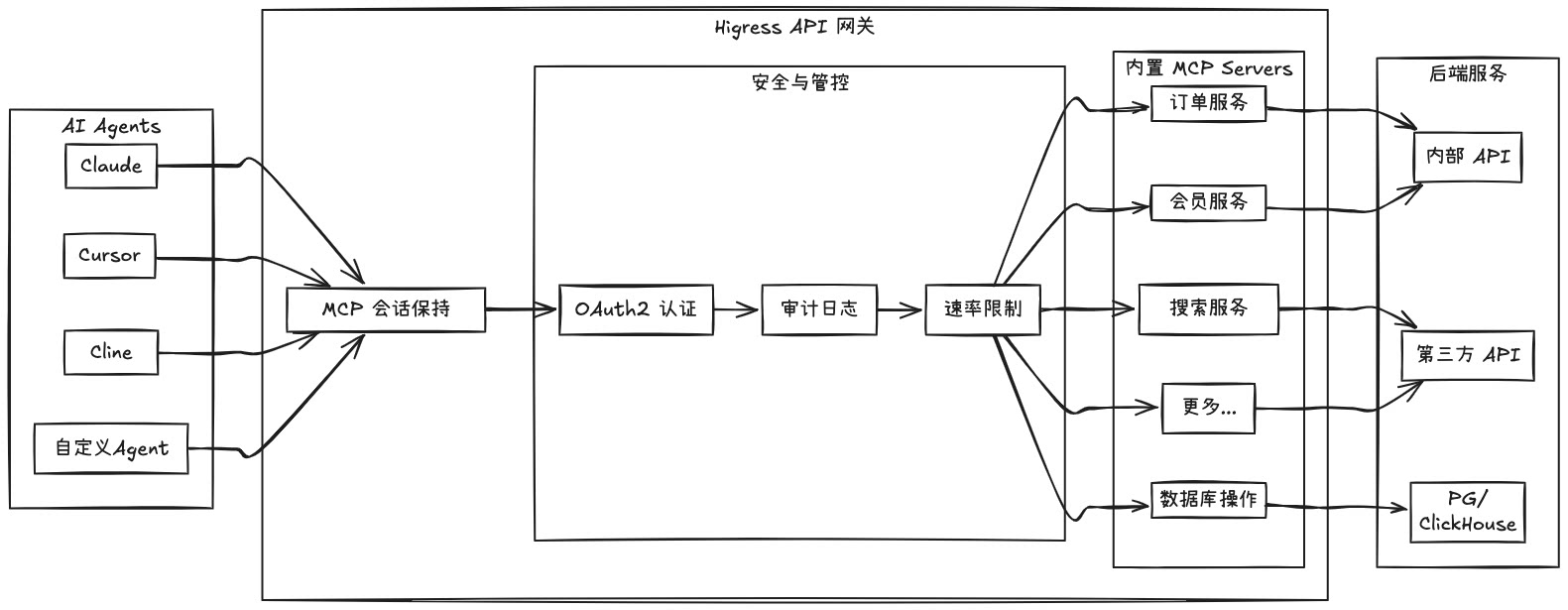
Higress 作为基于 Envoy 的 API 网关,支持通过插件方式托管 MCP Server。MCP(Model Context Protocol)本质是面向 AI 更友好的 API,使 AI Agent 能够更容易地调用各种工具和服务。Higress 可以统一处理工具调用的认证/鉴权/限流/观测等能力,简化 AI 应用的开发和部署。
|
||
|
||
|
||
|
||
通过 Higress 托管 MCP Server,可以实现:
|
||
- 统一的认证和鉴权机制,确保 AI 工具调用的安全性
|
||
- 精细化的速率限制,防止滥用和资源耗尽
|
||
- 完整的审计日志,记录所有工具调用行为
|
||
- 丰富的可观测性,监控工具调用的性能和健康状况
|
||
- 简化的部署和管理,通过 Higress 插件机制快速添加新的 MCP Server
|
||
|
||
下面介绍如何使用 Higress WASM Go SDK 实现 Model Context Protocol (MCP) 服务器。MCP 服务器提供工具和资源,扩展 AI 助手的能力。
|
||
|
||
## 概述
|
||
|
||
MCP 服务器是一个独立的应用程序,通过 Model Context Protocol 与 AI 助手通信。它可以提供:
|
||
|
||
- **工具**:可以被 AI 调用以执行特定任务的函数
|
||
- **资源**:可以被 AI 访问的数据
|
||
|
||
> **注意**:MCP 服务器插件需要 Higress 2.1.0 或更高版本才能使用。
|
||
|
||
## 项目结构
|
||
|
||
一个典型的 MCP 服务器项目具有以下结构:
|
||
|
||
```
|
||
my-mcp-server/
|
||
├── go.mod # Go 模块定义
|
||
├── go.sum # Go 模块校验和
|
||
├── main.go # 注册工具和资源的入口点
|
||
├── server/
|
||
│ └── server.go # 服务器配置和解析
|
||
└── tools/
|
||
└── my_tool.go # 工具实现
|
||
```
|
||
|
||
## 服务器配置
|
||
|
||
服务器配置定义了服务器运行所需的参数。例如:
|
||
|
||
```go
|
||
// server/server.go
|
||
package server
|
||
|
||
import (
|
||
"encoding/json"
|
||
"errors"
|
||
|
||
"github.com/alibaba/higress/plugins/wasm-go/pkg/wrapper"
|
||
)
|
||
|
||
// 定义服务器配置结构
|
||
type MyMCPServer struct {
|
||
ApiKey string `json:"apiKey"`
|
||
// 根据需要添加其他配置字段
|
||
}
|
||
|
||
// 验证配置
|
||
func (s MyMCPServer) ConfigHasError() error {
|
||
if s.ApiKey == "" {
|
||
return errors.New("missing api key")
|
||
}
|
||
return nil
|
||
}
|
||
|
||
// 从 JSON 解析配置
|
||
func ParseFromConfig(configBytes []byte, server *MyMCPServer) error {
|
||
return json.Unmarshal(configBytes, server)
|
||
}
|
||
|
||
// 从 HTTP 请求解析配置
|
||
func ParseFromRequest(ctx wrapper.HttpContext, server *MyMCPServer) error {
|
||
return ctx.ParseMCPServerConfig(server)
|
||
}
|
||
```
|
||
|
||
## 工具实现
|
||
|
||
每个工具应该实现为一个具有以下方法的结构体:
|
||
|
||
1. `Description()`:返回工具的描述
|
||
2. `InputSchema()`:返回工具输入参数的 JSON schema
|
||
3. `Create()`:使用提供的参数创建工具的新实例
|
||
4. `Call()`:执行工具的功能
|
||
|
||
示例:
|
||
|
||
```go
|
||
// tools/my_tool.go
|
||
package tools
|
||
|
||
import (
|
||
"encoding/json"
|
||
"fmt"
|
||
"net/http"
|
||
|
||
"my-mcp-server/server"
|
||
|
||
"github.com/alibaba/higress/plugins/wasm-go/pkg/wrapper"
|
||
)
|
||
|
||
// 定义带有输入参数的工具结构
|
||
type MyTool struct {
|
||
Param1 string `json:"param1" jsonschema_description:"参数1的描述" jsonschema:"example=示例值"`
|
||
Param2 int `json:"param2,omitempty" jsonschema_description:"参数2的描述" jsonschema:"default=5"`
|
||
}
|
||
|
||
// Description 返回 MCP 工具定义的描述字段。
|
||
// 这对应于 MCP 工具 JSON 响应中的 "description" 字段,
|
||
// 提供了工具目的和用法的人类可读解释。
|
||
func (t MyTool) Description() string {
|
||
return `详细描述这个工具做什么以及何时使用它。`
|
||
}
|
||
|
||
// InputSchema 返回 MCP 工具定义的 inputSchema 字段。
|
||
// 这对应于 MCP 工具 JSON 响应中的 "inputSchema" 字段,
|
||
// 定义了工具输入参数的 JSON Schema,包括属性类型、描述和必填字段。
|
||
func (t MyTool) InputSchema() map[string]any {
|
||
return wrapper.ToInputSchema(&MyTool{})
|
||
}
|
||
|
||
// Create 基于 MCP 工具调用的输入参数实例化一个新的工具实例。
|
||
// 它将 JSON 参数反序列化为结构体,为可选字段应用默认值,并返回配置好的工具实例。
|
||
func (t MyTool) Create(params []byte) wrapper.MCPTool[server.MyMCPServer] {
|
||
myTool := &MyTool{
|
||
Param2: 5, // 默认值
|
||
}
|
||
json.Unmarshal(params, &myTool)
|
||
return myTool
|
||
}
|
||
|
||
// Call 实现处理 MCP 工具调用的核心逻辑。当通过 MCP 框架调用工具时,执行此方法。
|
||
// 它处理配置的参数,进行必要的 API 请求,并格式化返回给调用者的结果。
|
||
func (t MyTool) Call(ctx wrapper.HttpContext, config server.MyMCPServer) error {
|
||
// 验证配置
|
||
err := server.ParseFromRequest(ctx, &config)
|
||
if err != nil {
|
||
return err
|
||
}
|
||
err = config.ConfigHasError()
|
||
if err != nil {
|
||
return err
|
||
}
|
||
|
||
// 在这里实现工具的逻辑
|
||
// ...
|
||
|
||
// 返回结果
|
||
ctx.SendMCPToolTextResult(fmt.Sprintf("结果: %s, %d", t.Param1, t.Param2))
|
||
return nil
|
||
}
|
||
```
|
||
|
||
## 主入口点
|
||
|
||
main.go 文件是 MCP 服务器的入口点。它注册工具和资源:
|
||
|
||
```go
|
||
// main.go
|
||
package main
|
||
|
||
import (
|
||
"my-mcp-server/server"
|
||
"my-mcp-server/tools"
|
||
|
||
"github.com/alibaba/higress/plugins/wasm-go/pkg/wrapper"
|
||
)
|
||
|
||
func main() {}
|
||
|
||
func init() {
|
||
wrapper.SetCtx(
|
||
"my-mcp-server", // 服务器名称
|
||
wrapper.ParseRawConfig(server.ParseFromConfig),
|
||
wrapper.AddMCPTool("my_tool", tools.MyTool{}), // 注册工具
|
||
// 根据需要添加更多工具
|
||
)
|
||
}
|
||
```
|
||
|
||
## 依赖项
|
||
|
||
您的 MCP 服务器必须使用支持 Go 1.24 WebAssembly 编译功能的特定版本的 wasm-go SDK:
|
||
|
||
```bash
|
||
# 添加具有特定版本标签的必需依赖项
|
||
go get github.com/alibaba/higress/plugins/wasm-go@wasm-go-1.24
|
||
```
|
||
|
||
## 构建 WASM 二进制文件
|
||
|
||
要将 Go 代码编译为 WebAssembly (WASM) 文件,请使用以下命令:
|
||
|
||
```bash
|
||
GOOS=wasip1 GOARCH=wasm go build -buildmode=c-shared -o main.wasm main.go
|
||
```
|
||
|
||
此命令将目标操作系统设置为 `wasip1`(WebAssembly 系统接口)和架构设置为 `wasm`(WebAssembly),然后将代码构建为 C 共享库并输出为 `main.wasm`。
|
||
|
||
## 使用 Makefile
|
||
|
||
提供了 Makefile 以简化构建过程。它包括以下目标:
|
||
|
||
- `make build`:为 MCP 服务器构建 WASM 二进制文件
|
||
- `make build-image`:构建包含 MCP 服务器的 Docker 镜像
|
||
- `make build-push`:构建并将 Docker 镜像推送到注册表
|
||
- `make clean`:删除构建产物
|
||
- `make help`:显示可用的目标和变量
|
||
|
||
您可以通过设置以下变量来自定义构建:
|
||
|
||
```bash
|
||
# 使用自定义服务器名称构建
|
||
make SERVER_NAME=my-mcp-server build
|
||
|
||
# 使用自定义注册表构建
|
||
make REGISTRY=my-registry.example.com/ build-image
|
||
|
||
# 使用特定版本标签构建
|
||
make SERVER_VERSION=1.0.0 build-image
|
||
```
|
||
|
||
## 测试
|
||
|
||
您可以为工具创建单元测试以验证其功能:
|
||
|
||
```go
|
||
// tools/my_tool_test.go
|
||
package tools
|
||
|
||
import (
|
||
"encoding/json"
|
||
"fmt"
|
||
"testing"
|
||
)
|
||
|
||
func TestMyToolInputSchema(t *testing.T) {
|
||
myTool := MyTool{}
|
||
schema := myTool.InputSchema()
|
||
|
||
schemaJSON, err := json.MarshalIndent(schema, "", " ")
|
||
if err != nil {
|
||
t.Fatalf("无法将 schema 序列化为 JSON: %v", err)
|
||
}
|
||
|
||
fmt.Printf("MyTool InputSchema:\n%s\n", string(schemaJSON))
|
||
|
||
if len(schema) == 0 {
|
||
t.Error("InputSchema 返回了空 schema")
|
||
}
|
||
}
|